A woman/wife/mother, charting her way in the world, pondering life and sharing her reflections.
4.06.2012
A Cut Above the Rest
In civil engineering the term 'cut' refers to a place where "soil or rock material from a hill or mountain is cut out to make way for a canal, road or railway." Generally cuts are created because the alternative of finding a way over or around the natural obstacle is too costly or not practical. Created by blasting through the rock or excavating - depending upon the size and type of soil - cuts typically provide mild grade changes that are easier for boats, vehicles and trains to climb, versus their previous alternative.
Back in the late 20's and 30's, when Route 66 was the main East/West byway for travelers and commercial truckers between Chicago and Los Angeles, there existed a spot near Hooker, MO (yes, an unfortunate name) where many truckers would have to pick up a lot of speed coming down 66 in order to get up the steep hill into Devils Elbow.
When construction of Ft. Leonard Wood began in 1940, a truck loaded down with an airplane got stuck at the bottom of the hill. It took the trucker all day to make it to the top. When he finally got into Devils Elbow he stopped at the Elbow Inn (then known as the Munger Moss Sandwich Shop), undoubtedly ordered a sandwich and a beer, and regaled the locals with his tale of the mountain climb.
Shortly thereafter highway and military officials deemed it necessary to realign Route 66 in order to allow for easier travel and movement of supplies. The decision was made to cut through the foothill just east of Devils Elbow and west of Hooker which locals called "Lookout Mountain."
After three years of work Hooker Cut was finished in 1943, the first four-lane portion of Route 66 east of Springfield, MO. At its completion it was considered "one of the deepest rock cuts in the U.S.," with Jack Rittenhouse describing it as "an engineering triumph, and truly a joy to the traveler," in his 1946 A Guide Book to Highway 66.
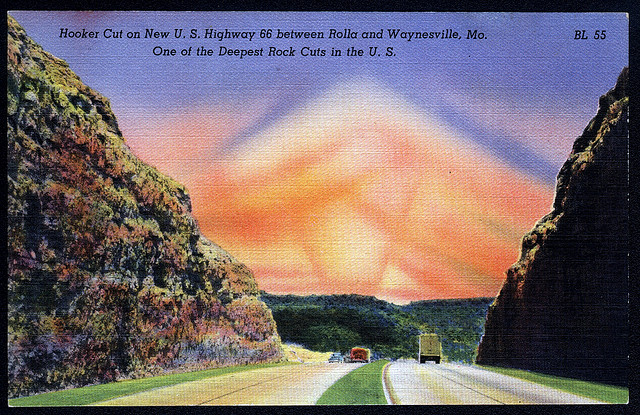
Today the route is slightly overgrown and not as well traveled as it was nearly 70 years ago. But the lines in the rock where the explosives were laid tell a story in America's civil engineering history, setting the stage for amazing feats the likes of Sideling Hill in Maryland, and the Pikeville Cut-Through in Kentucky.
It's funny how often we take things for granted. The Hooker Cut took years to come to fruition, allowing travelers an easier and faster means of getting through the portion of Route 66 that ran through Pulaski County. In turn, it took decades to construct the interstate highways that overtook Route 66 and made the Hooker Cut and the "mother road" nearly obsolete.
Today we drive along freeways, never paying much mind as to what is below us or around us. We forget how much time, energy and money it took to make our lives so much easier, thanks to the engineers and contractors who connected our country through a complex road system that serves as the circulatory system of America.
So, the next time you're out - be it on a short trip to the grocery store or road trip for a family vacation - take a moment to realize that you're driving on highways and routes which, combined, make up the largest public works projects in history.
References:
Hooker Cut History
Hooker Cut Postcards
Route 66 Information
Interstate Highway System
Civil Engineering - Cuts
4.01.2012
A Midwest Way of Ease
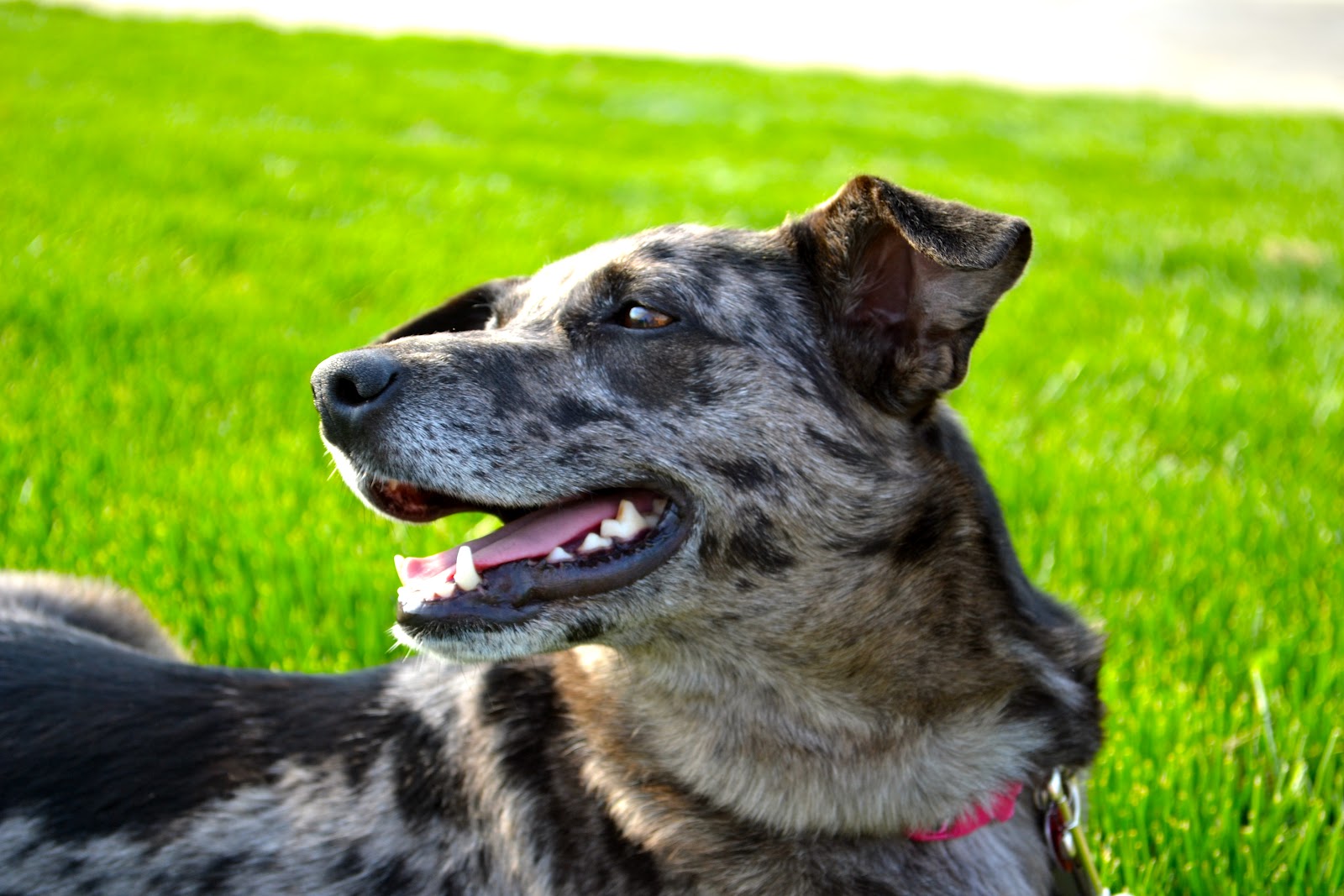
In these early days of Spring, life in the Ozarks has been practically perfect. The sun has been shining, kids have been outside playing, neighbors have been working in their yards, and we have been busy with our new dog, Sabrina. Our furry companion has brought a new sense of humor and happiness to our lives which I can only describe as "puppy love."
Still, despite the great days, we've had a couple of days where an unacclimated Sabrina has made mistakes in the house and is still getting adjusted to her new life. A very loyal companion, Sabrina wants to be with her people at all times. So, when we left the house for 45 minutes the other day and came home to find the bottom of her crate shredded, we realized our new dog has some separation anxiety.
We're slowly introducing the crate and being away from Sabrina in a more "Dog Whisperer" friendly kind of way; we put her in the cage, then leave for a few minutes and come back in. Incrementally we'll start increasing the time, and hopefully she'll get over her anxiety of being left alone.
Indeed, I'm sure part of this anxiety comes from the fact that she lived for the past 6 months in a shelter where she spent 23 hours of her day in a dog run. When she came to us, all of a sudden she was in a world where there were no kennel-like facilities, no concrete floors, and people that wanted to play with her and pet her 16 hours of the day. It was a whole new world. And I have to think that when we put her back in a cage the other day, fears and anxiety that she was going back to her old lifestyle overcame her poor little doggie brain.
Still, while we introduce the concept of a safe place for Sabrina to stay when we leave her alone - the cage - we also love to have her around as much as possible. She's our new sidekick. As such she accompanies us most places, to include exotic locales in Pulaski County when I make my weekly, Wednesday excursion.
This week Sabrina and I made our way to Richland, a small town of 1,863 people, which sits in three counties (Pulaski, Laclede and Camden). Like many of the towns I've researched, Richland was a town borne in the late 19th century from the railroad boom. However, unlike the other towns I've researched in Pulaski County, Richland has maintained a certain zeal and lifeblood that has allowed it to thrive, where others have faltered.
When the railroad first came to Pulaski county in the 1880's, the Frisco Railroad's surveyor, M. Santee (previously discussed in the Dixon blog), considered the spot to be a prime location for a town to be established. As such, in 1870, with a population of 500, Richland was incorporated and deemed - by an 1874 article in the Gazetteer of Missouri - "one of the most flourishing cities in the county."
Those living in the Richland area prior to the arrival of the railroad made their livelihoods primarily from general farming. However, the introduction of the railroad brought new, prosperous opportunities for the existing family farms, as well as new inhabitants.
Livestock would quickly become the main money-maker in Richland, and near the turn of the century a stockyard was built which shipped cattle, hogs and sheep daily on the railway. Additionally a lumberyard was created, which housed local white oak, post oak and walnut timber from loggers that floated their cuts down the Gasconade River to a ford just south of the city. This lumber would be cut down into railroad ties, bought by the Frisco R&R, and sent westward in the expansion of the country.
With industry thriving and the railway exporting their natural resources, the citizens of the newly established community (named after Mr. G. W. Rich - a director of the Frisco Railroad) secured a designation as a "fourth class city." "By 1890, Richland was a thriving business center with active stores, a band, newspaper, public school, a private academy, churches, lodges, two flouring mills, a sawmill, broom factory, marble works, lumberyard, two hotels and many professional men."
Through the years Richland has maintained its place in the county as a model of mid-American life. It is a community which stands proudly behind its past and continuing presence as an industrial city in Pulaski County, boasting businesses like Ozark Fisheries, Inc., ATR Lighting Enterprises, Inc., and Charger Boats, Inc.
Richland's Chamber of Commerce boasts on their website that Richland is "the Midwest's best kept secret in small town living," and they just may be right. While the railroad's presence has waned over the years, the community's pride has kept Richland alive.
The website goes on to offer that if you stop by for a visit, you may stay longer than you intended, and there is indeed a sense of being welcome in Richland that you don't find in many other places. People are friendly and want to chat in the park, gas station attendants wave as you pass by in your car (yes, they still have gas station attendant's here, who will check your oil and clean your windows), and everyone I talked to seemed to have a smile on their face.
Perhaps it was just the unseasonably gorgeous weather that had everyone in a good mood; I don't know. I'd like to think that the website had it right, and that the people of Richland "have a way of making newcomers feel like they have come home." They possess a sense of civic pride that is hard to come by these days, but when found makes you feel like you're part of something special.
Resources:
Richland Depot History
City History - Richland
Welcome to Richland
**I'd like to credit the title of my post to the O.A.R. song "Road Outside Columbus"**
Still, despite the great days, we've had a couple of days where an unacclimated Sabrina has made mistakes in the house and is still getting adjusted to her new life. A very loyal companion, Sabrina wants to be with her people at all times. So, when we left the house for 45 minutes the other day and came home to find the bottom of her crate shredded, we realized our new dog has some separation anxiety.
We're slowly introducing the crate and being away from Sabrina in a more "Dog Whisperer" friendly kind of way; we put her in the cage, then leave for a few minutes and come back in. Incrementally we'll start increasing the time, and hopefully she'll get over her anxiety of being left alone.
Indeed, I'm sure part of this anxiety comes from the fact that she lived for the past 6 months in a shelter where she spent 23 hours of her day in a dog run. When she came to us, all of a sudden she was in a world where there were no kennel-like facilities, no concrete floors, and people that wanted to play with her and pet her 16 hours of the day. It was a whole new world. And I have to think that when we put her back in a cage the other day, fears and anxiety that she was going back to her old lifestyle overcame her poor little doggie brain.
Still, while we introduce the concept of a safe place for Sabrina to stay when we leave her alone - the cage - we also love to have her around as much as possible. She's our new sidekick. As such she accompanies us most places, to include exotic locales in Pulaski County when I make my weekly, Wednesday excursion.
This week Sabrina and I made our way to Richland, a small town of 1,863 people, which sits in three counties (Pulaski, Laclede and Camden). Like many of the towns I've researched, Richland was a town borne in the late 19th century from the railroad boom. However, unlike the other towns I've researched in Pulaski County, Richland has maintained a certain zeal and lifeblood that has allowed it to thrive, where others have faltered.
When the railroad first came to Pulaski county in the 1880's, the Frisco Railroad's surveyor, M. Santee (previously discussed in the Dixon blog), considered the spot to be a prime location for a town to be established. As such, in 1870, with a population of 500, Richland was incorporated and deemed - by an 1874 article in the Gazetteer of Missouri - "one of the most flourishing cities in the county."
Those living in the Richland area prior to the arrival of the railroad made their livelihoods primarily from general farming. However, the introduction of the railroad brought new, prosperous opportunities for the existing family farms, as well as new inhabitants.
Livestock would quickly become the main money-maker in Richland, and near the turn of the century a stockyard was built which shipped cattle, hogs and sheep daily on the railway. Additionally a lumberyard was created, which housed local white oak, post oak and walnut timber from loggers that floated their cuts down the Gasconade River to a ford just south of the city. This lumber would be cut down into railroad ties, bought by the Frisco R&R, and sent westward in the expansion of the country.
With industry thriving and the railway exporting their natural resources, the citizens of the newly established community (named after Mr. G. W. Rich - a director of the Frisco Railroad) secured a designation as a "fourth class city." "By 1890, Richland was a thriving business center with active stores, a band, newspaper, public school, a private academy, churches, lodges, two flouring mills, a sawmill, broom factory, marble works, lumberyard, two hotels and many professional men."
Through the years Richland has maintained its place in the county as a model of mid-American life. It is a community which stands proudly behind its past and continuing presence as an industrial city in Pulaski County, boasting businesses like Ozark Fisheries, Inc., ATR Lighting Enterprises, Inc., and Charger Boats, Inc.
Richland's Chamber of Commerce boasts on their website that Richland is "the Midwest's best kept secret in small town living," and they just may be right. While the railroad's presence has waned over the years, the community's pride has kept Richland alive.
The website goes on to offer that if you stop by for a visit, you may stay longer than you intended, and there is indeed a sense of being welcome in Richland that you don't find in many other places. People are friendly and want to chat in the park, gas station attendants wave as you pass by in your car (yes, they still have gas station attendant's here, who will check your oil and clean your windows), and everyone I talked to seemed to have a smile on their face.
Perhaps it was just the unseasonably gorgeous weather that had everyone in a good mood; I don't know. I'd like to think that the website had it right, and that the people of Richland "have a way of making newcomers feel like they have come home." They possess a sense of civic pride that is hard to come by these days, but when found makes you feel like you're part of something special.
Resources:
Richland Depot History
City History - Richland
Welcome to Richland
**I'd like to credit the title of my post to the O.A.R. song "Road Outside Columbus"**
3.26.2012
Dog Day Afternoons
It was a beautiful weekend here in Missouri and everyone was outside doing yard work, playing in parks, fishing on the Gasconade, or just enjoying the weather with a hike through the woods.
While Matt and I awaited the arrival of our new lawnmower in the mail - via the UPS man - we decided that yard-work would have to be put off for a few days. So, in lieu of staying in our own backyard, we decided to explore a bit this weekend.
Accompanying us on our travels through the Missouri countryside was our trusty new dog, Sabrina, who was excited to get out into the woods and sniff away at the fresh air and underbrush of the hills - where I'm sure she smelled some feral hogs, as they are known to roam the eastern boundaries of Ft. Leonard Wood.
We decided to make our way to Miller Cave, one of five major cave systems in the Ft. Leonard Wood cantonment area. A prehistoric site, the Miller Cave complex has provided archaeological evidence that shows the site being used as "a permanent base camp, burial ground and loci for Native American tribes in the region between 7000 B.C. and 1400 A.D."
Nestled 150 feet above the Big Piney River in a sheer cliff-face, overlooking the Big Piney River Valley, the Miller Cave Complex is not only an important archaeological site, but a geological gemstone as well.
Geographically speaking, Miller Cave is located in the Salem Plateau (northern Ozark Highland) of the Missouri Ozarks. The geological components of the rock and earth in the region showcase ordovician-age dolomites and sandstones - remnants of an ancient sea which once covered this area. Through the course of millions of years (the plaque specifically said "200 million") ground water has "uplifted, incised and dissolved [these rocks]....forming steep-sided bluffs and numerous caves and rock shelters." Through this process it has left the countryside marked with caves, springs and underground caverns that are truly wonders to behold.
However, aside from its beauty, there is a sense of reverence one has when walking through the complex. If the walls of such a place could talk, they would undoubtedly speak of music, laughter, love, sorrow, life and death. The cave has seen men come and go through the millennia, and while those men altered their ways of life in the world outside, they never changed the cave which provided them a haven, leaving behind their history for us to remember.
References:
Miller Cave - FLW
Plaques on premise
While Matt and I awaited the arrival of our new lawnmower in the mail - via the UPS man - we decided that yard-work would have to be put off for a few days. So, in lieu of staying in our own backyard, we decided to explore a bit this weekend.
Accompanying us on our travels through the Missouri countryside was our trusty new dog, Sabrina, who was excited to get out into the woods and sniff away at the fresh air and underbrush of the hills - where I'm sure she smelled some feral hogs, as they are known to roam the eastern boundaries of Ft. Leonard Wood.
We decided to make our way to Miller Cave, one of five major cave systems in the Ft. Leonard Wood cantonment area. A prehistoric site, the Miller Cave complex has provided archaeological evidence that shows the site being used as "a permanent base camp, burial ground and loci for Native American tribes in the region between 7000 B.C. and 1400 A.D."
Nestled 150 feet above the Big Piney River in a sheer cliff-face, overlooking the Big Piney River Valley, the Miller Cave Complex is not only an important archaeological site, but a geological gemstone as well.
Geographically speaking, Miller Cave is located in the Salem Plateau (northern Ozark Highland) of the Missouri Ozarks. The geological components of the rock and earth in the region showcase ordovician-age dolomites and sandstones - remnants of an ancient sea which once covered this area. Through the course of millions of years (the plaque specifically said "200 million") ground water has "uplifted, incised and dissolved [these rocks]....forming steep-sided bluffs and numerous caves and rock shelters." Through this process it has left the countryside marked with caves, springs and underground caverns that are truly wonders to behold.
However, aside from its beauty, there is a sense of reverence one has when walking through the complex. If the walls of such a place could talk, they would undoubtedly speak of music, laughter, love, sorrow, life and death. The cave has seen men come and go through the millennia, and while those men altered their ways of life in the world outside, they never changed the cave which provided them a haven, leaving behind their history for us to remember.
References:
Miller Cave - FLW
Plaques on premise
Subscribe to:
Posts (Atom)